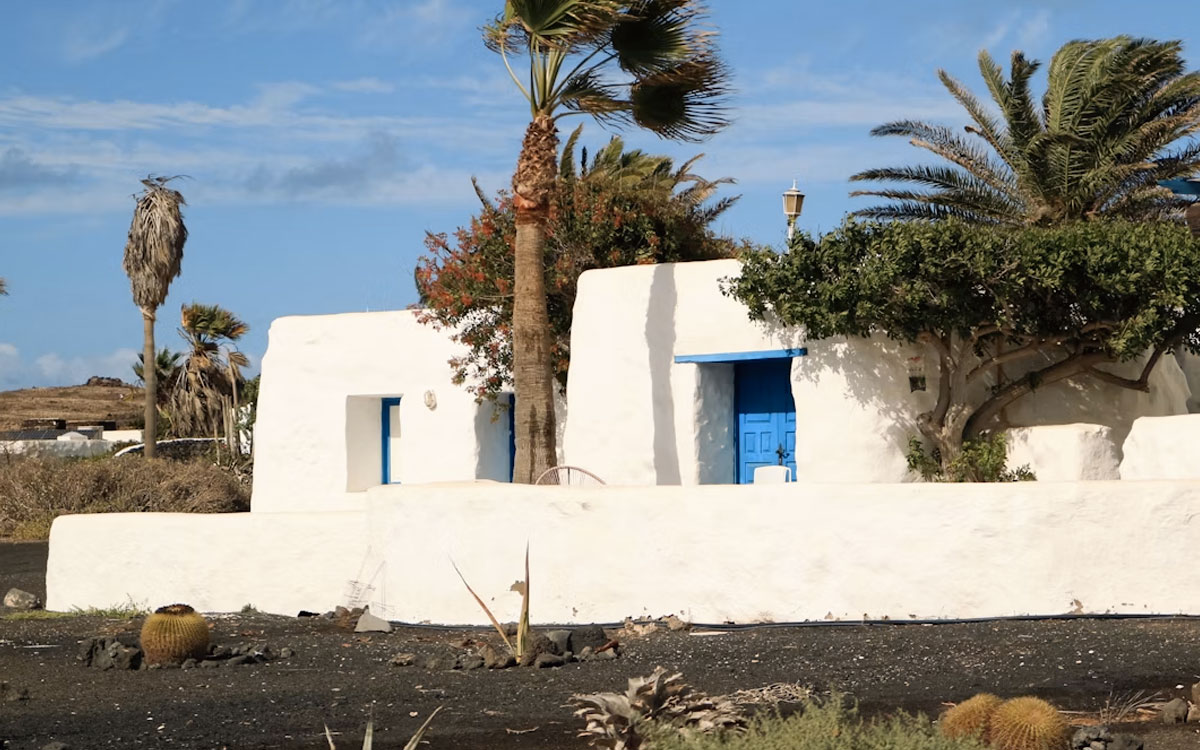
One of the most recognisable images on the island is that of the white houses in Lanzarote standing against black, red and ochre volcanic terrain. The contrast is not simply the result of a modern aesthetic choice: it reflects centuries of vernacular architecture, adaptation to local conditions and, much later, César Manrique’s determined defence of the island’s visual identity.
On the First Minute Excursions and Last Minute Transfer blogs, we like to look at details like these because they explain why Lanzarote can often be recognised at a glance.
The white walls came before César Manrique
An important misconception should be cleared up first.
César Manrique did not invent Lanzarote’s whitewashed houses. Lime-covered façades were already part of the island’s traditional architecture generations before his campaign to preserve its landscape.
Lime helped protect buildings and contributed to the performance of homes designed for a sunny, windy and relatively dry environment.
Traditional houses were generally practical rather than decorative, with compact forms and relatively few external openings.
White began as part of a functional architecture and eventually became one of Lanzarote’s strongest visual signatures.
White walls against black volcanic ground
The colour contrast is especially powerful because of the landscape surrounding the buildings.
Bright façades stand out against basalt, volcanic ash and dark lava fields. Green vegetation, blue skies and coloured wooden doors then add a small number of intense accents.
This relationship between architecture and geology is visible throughout inland Lanzarote.
It can also be appreciated in places such as Lagomar, where buildings, volcanic rock and interior spaces form an unusually close relationship.
Traditional architecture does not visually fight against the landscape; it becomes part of it.
Why are so many doors and windows green?
Green woodwork is another familiar feature.
Doors, shutters and window frames brought colour to otherwise white buildings, and green became particularly associated with many rural and inland properties.
It would be misleading to suggest that every historic building followed exactly the same formula, but white walls and green woodwork form one of the most recognisable combinations in Lanzarote’s traditional architecture.
César Manrique later incorporated the same language into projects inspired by vernacular buildings, including the Casa Museo del Campesino.
Why do we also see blue doors near the coast?
Blue is another colour frequently associated with Lanzarote’s built landscape.
Traditionally, blue woodwork has been linked particularly with coastal environments, while green is commonly associated with inland areas. Brown and other variations also appear depending on period, building and location.
It is therefore better understood as a strong architectural tradition rather than a rigid island-wide colour code.
Near the ocean, the combination of white walls and blue details creates an obvious visual dialogue with the Atlantic.
César Manrique’s crucial role
This is where Manrique becomes essential to the story.
When the Lanzarote-born artist returned permanently to the island in the 1960s, tourism was beginning to reshape the territory.
Manrique believed that development did not have to erase the island’s identity. He became deeply interested in traditional anonymous architecture and spent years documenting buildings across Lanzarote.
That work eventually resulted in the 1974 publication Lanzarote. Arquitectura inédita, conceived as a visual record of vernacular buildings at risk of disappearing.
He championed white façades, low-rise development, visual harmony and architecture that respected the volcanic environment.
His achievement was not to invent Lanzarote’s traditional architecture, but to recognise its value and help turn its preservation into a central part of the island’s future.
The same relationship between architecture and nature can be seen at Mirador del Río, included in our guide to the best viewpoints in Lanzarote.
Villages where the details become clearer
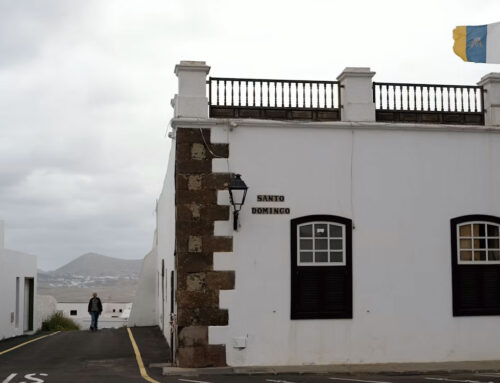
Teguise is one of the best places to appreciate the island’s architectural heritage.
Its historic centre combines modest traditional homes with larger historic buildings, wooden balconies, white façades and stone-paved streets.
Haría offers another atmosphere, framed by its distinctive palm grove and a strong connection with traditional island life.
Other inland settlements such as San Bartolomé and Yaiza also reveal how walls, courtyards, chimneys, doors and windows vary while maintaining a recognisable local language.
The white houses in Lanzarote are therefore much more than photogenic backgrounds.
They are historical documents that happen to be lived in.
Architecture designed for island life
Some of the most important details are not immediately visible.
Traditional homes responded to scarce water resources through cisterns used to collect and store rainwater. Thick walls, limited openings and local construction materials also reflected climate and available resources.
Courtyards became practical domestic spaces, while buildings adapted themselves to the surrounding terrain.
Many features we now admire for their beauty originally existed because they solved everyday problems.
This practical intelligence is one reason Manrique saw so much value in vernacular Lanzarote architecture.
More than a white postcard
It is tempting to imagine today’s visual identity as something that appeared fully formed.
The reality is more interesting.
Lanzarote’s appearance developed from generations of practical architecture and was later reinforced by a conscious effort to prevent tourism and rapid construction from erasing the island’s character.
The white houses in Lanzarote therefore tell a wider story about landscape, culture and the choices made about how development should interact with a fragile volcanic environment.
At First Minute Excursions, we believe noticing a window, courtyard or painted door can sometimes explain a destination as clearly as its most famous monuments.
In Lanzarote, even the colour of a house helps tell the story of the island.



Leave A Comment