
Among volcanic slopes, subtropical fruit trees and deep valleys grows Agaete coffee, one of Gran Canaria’s most distinctive local products. Its appeal goes well beyond the cup itself: understanding this small crop reveals how climate, agriculture and local history have shaped a remarkable corner of the island.
On the First Minute Excursions and Last Minute Transfer blogs, we also like to explore these details because they help explain Gran Canaria beyond its beaches and famous viewpoints.
A coffee tradition dating back to the 19th century
The first coffee plants are believed to have reached the Agaete Valley during the first half of the 19th century.
They came from the acclimatisation garden in La Orotava, Tenerife, and found suitable conditions in this sheltered area of north-western Gran Canaria.
Coffee did not develop here as a vast plantation crop. Instead, plants traditionally grew alongside other species, initially under banana trees and later among oranges, mangoes, papayas and other subtropical fruit trees.
This mixed agricultural landscape remains one of the defining features of the valley.
It also helps explain why Agaete can feel unexpectedly lush compared with more arid parts of the Canary Islands.
Why coffee grows in Agaete
One of the most unusual aspects of the crop is its relatively low altitude compared with many major coffee-producing regions.
The Agaete Valley benefits from a particular combination of mountains, mild temperatures, volcanic soils and local climatic conditions.
The variety most closely associated with the traditional plantations is Coffea arabica typica, one of the historic varieties of Arabica coffee.
Production remains small in scale and closely connected to individual farms.
Coffee here is part of a broader agricultural ecosystem rather than an extensive monoculture.
From coffee plant to cup
The process begins with the coffee plant and its fruit, commonly known as coffee cherries.
Once harvested, the fruit must be processed so the beans can be separated, dried, roasted and eventually prepared for drinking.
Historically, Agaete families even dried coffee fruits in the sun on the rooftops of their homes before processing them by hand.
Production methods have naturally evolved, but the crop still has a strong artisanal character.
Agaete coffee experienced renewed momentum during the early 21st century as local growers worked to recover production and strengthen its identity. A collective initiative to roast and package coffee under the name associated with the valley took place in 2006.
Coffee is only one part of Agaete’s landscape
The valley should not be understood in isolation from its surroundings.
Above it rises the mountain landscape of Tamadaba, while following the terrain towards the Atlantic eventually brings us to Agaete and Puerto de las Nieves.
Our guide to Tamadaba Natural Park shows the dramatic mountain and pine-forest side of north-west Gran Canaria.
Closer to the coast, the scenery becomes markedly different.
Within a relatively short distance, coffee plants and tropical fruit trees give way to pine forest, cliffs and volcanic coastline.
This diversity is one of the reasons the area is so interesting.
From the valley to Puerto de las Nieves
Agaete’s relationship with the sea is just as important as its agricultural heritage.
The natural pools known as Las Salinas are located next to Puerto de las Nieves and form part of our guide to natural pools in Gran Canaria.
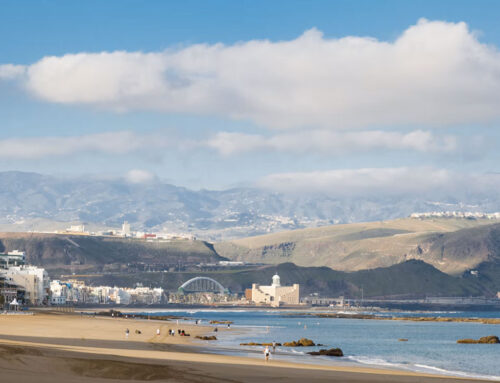
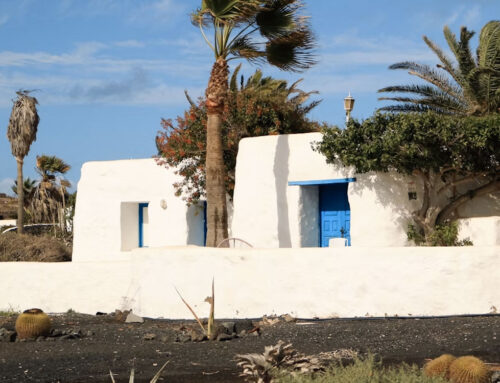
The harbour settlement combines whitewashed buildings, volcanic coastline and an enduring maritime character.
Puerto de las Nieves also features in our guide to the best sunsets in Gran Canaria, where the cliffs and mountains of Tamadaba create a striking Atlantic backdrop.
Coffee, mountains and ocean come together here in an unusually compact landscape.
More than a drink: part of local identity
Coffee is not the valley’s only agricultural product.
Subtropical fruit trees form an important part of its scenery, while the broader municipality combines farming traditions with fishing and coastal gastronomy.
This makes Agaete coffee far more interesting than a simple culinary curiosity. It provides a way to understand how agriculture adapted to volcanic terrain and very specific local conditions.
Agaete’s cultural identity also includes traditions such as the Fiesta de la Rama, one of the municipality’s best-known celebrations.
Food, landscape and local traditions are closely intertwined in this part of Gran Canaria.
What does Agaete coffee taste like?
Describing coffee always involves a degree of subjectivity.
Roasting, preparation method and the individual harvest all influence what eventually reaches the cup.
Coffee specialists involved in the revival of the crop have described fruity and sweet characteristics, relatively low acidity and notes reminiscent of chocolate or liquorice.
For that reason, it is more useful to think of a coffee with a distinctive local identity rather than a flavour that will be identical in every cup.
The character of the product begins long before brewing, in the soil, fruit trees and sheltered landscape of the valley.
A small crop that tells a larger story
Agaete coffee captures something essential about Gran Canaria: very different landscapes, climates and traditions can exist remarkably close together.
Coffee plants growing among subtropical trees, the pine forests of Tamadaba and the Atlantic coastline of Puerto de las Nieves all belong to the same geographical story.
At First Minute Excursions, we believe these details make travel more rewarding because they allow us to understand a destination rather than simply look at it.
Few local products tell the story of their landscape as clearly as the coffee grown in Agaete.



Leave A Comment