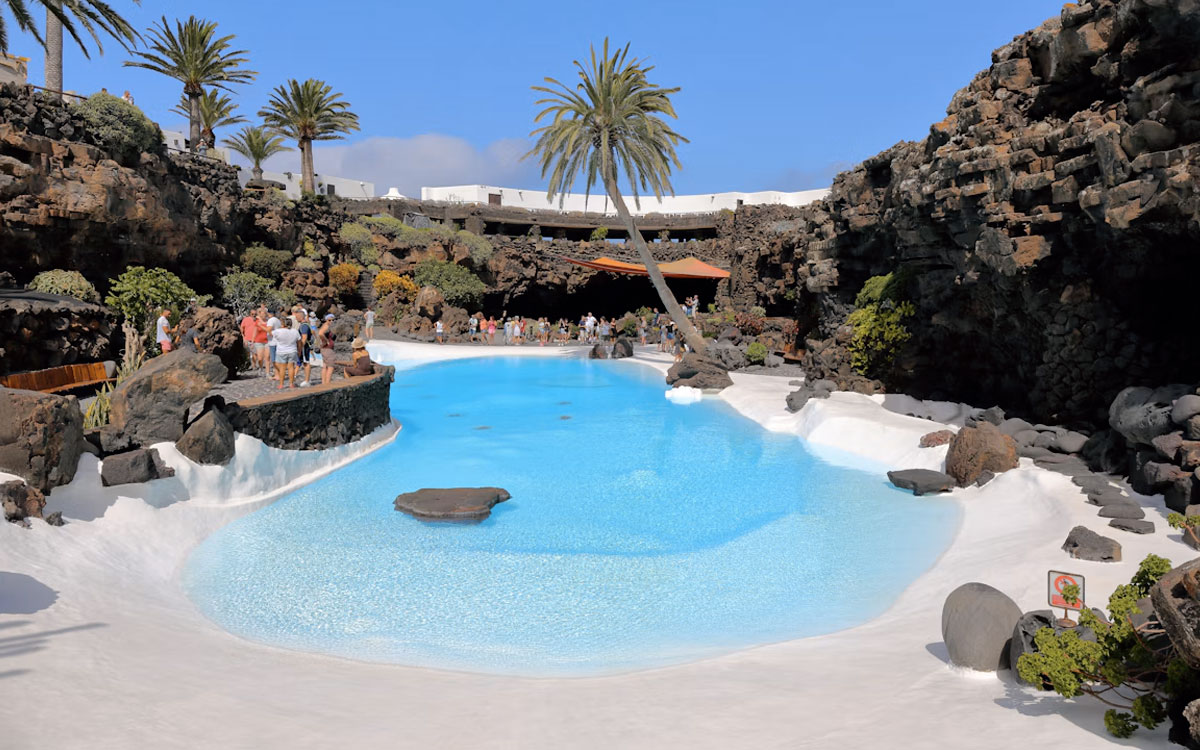
If you are planning to explore northern Lanzarote, visiting Jameos del Agua offers a remarkable opportunity to experience volcanic geology, architecture and natural beauty in one place. Designed within a lava tube transformed by César Manrique, the attraction combines an underground lake, unusual wildlife and carefully integrated artistic spaces.
At First Minute Excursions and Last Minute Transfer, we enjoy introducing visitors to the destinations that reveal Lanzarote’s distinctive relationship between nature, culture and landscape.
What Are Jameos del Agua and Where Are They?
The attraction is located in the municipality of Haría, along the road between Arrieta and Órzola, in northern Lanzarote.
It occupies part of the volcanic tube formed by eruptions of La Corona volcano.
As molten lava travelled towards the coast, its outer layers cooled while the material underneath continued flowing. When the lava drained away, underground passages remained.
Sections of the roof subsequently collapsed, creating openings called jameos.
These natural geological formations provide the foundations of the cultural complex visitors experience today.
The same volcanic system includes Cueva de los Verdes and continues beneath the ocean through the Atlantis Tunnel.
Our article about Lanzarote’s lava tunnels explores the geology behind this extraordinary underground landscape.
César Manrique and the Transformation of Nature
César Manrique transformed this volcanic environment into one of Lanzarote’s most recognisable cultural landmarks.
The project began during the 1960s and became the first Art, Culture and Tourism Centre created by the artist.
Rather than hiding the natural rock formations, he incorporated their shapes, colours and textures into an architectural design that respects the original environment.
White surfaces, dark volcanic stone, water and vegetation form a carefully balanced composition.
This approach can also be appreciated in other places associated with Manrique, including Mirador del Río and Jardín de Cactus.
Visitors interested in architecture will find the attraction particularly rewarding because the landscape is not simply a backdrop: it is part of the design itself.
What to See at Jameos del Agua
The visitor route connects underground spaces with open-air areas, revealing different aspects of the volcanic environment.
Each section offers a distinctive combination of geology, biodiversity and artistic intervention.
Jameo Chico and the Underground Lake
The experience begins by descending into Jameo Chico, where the lava walls create a dramatic natural setting.
One of the highlights is the underground lake, which is connected to the marine environment.
Its waters are home to a small endemic crustacean known as the blind albino crab, scientifically named Munidopsis polymorpha.
These pale creatures have adapted to life in the darkness of the volcanic system.
Throwing coins or other objects into the lake is prohibited, as foreign materials can damage the delicate ecosystem.
Jameo Grande and the Ornamental Pool
The route continues towards Jameo Grande, where the volcanic cavity opens into a landscaped area.
Here you will find the famous pool surrounded by contrasting white surfaces, dark rock and vegetation.
Its organic shapes reflect César Manrique’s distinctive approach to landscape design.
The pool is ornamental and swimming is not permitted.
The Volcanic Auditorium
Another important part of the complex is the auditorium, integrated into the original volcanic cavity.
Its unusual setting demonstrates how the natural landscape can become a space for cultural activity.
The auditorium forms part of the attraction and hosts selected performances and concerts.
It is one of the clearest examples of how architecture can work with existing geological features.
Casa de los Volcanes: An Additional Experience
Visitors who want to learn more about Lanzarote’s geology can explore Casa de los Volcanes, located within the complex.
The museum includes scientific exhibits, immersive resources and displays about volcanic processes and planetary research.
Admission to Casa de los Volcanes is not automatically included in the standard Jameos del Agua ticket.
Visitors should select the appropriate admission option if they want to explore both spaces.
The main visitor route generally takes around 60 minutes, while the museum can add approximately another hour.
It is particularly interesting for travellers who enjoy science, geology and understanding the landscapes they visit.
Tickets, Opening Hours and Practical Information
Before visiting Jameos del Agua, it is worth checking the latest information published by Lanzarote’s Art, Culture and Tourism Centres.
The currently published opening hours are 10:00 am to 6:00 pm, with last entry at 5:15 pm.
Standard admission starts at €17, although different ticket categories and discounts may apply.
General admission does not require selecting a specific entry time, while certain special experiences have separate booking conditions.
The attraction has parking facilities, and digital tickets can be presented using a QR code.
A few practical points are especially useful:
- Footwear: wear comfortable shoes suitable for volcanic stone and steps.
- Babies: pushchairs are not allowed; a baby carrier is recommended.
- Accessibility: stairs, changes in level and uneven surfaces present difficulties for visitors with reduced mobility.
- Conservation: do not touch volcanic formations or throw anything into the lake.
- Photography: ordinary photography is permitted, but drones are prohibited.
During particularly high tides, water can partially cover sections of the route. Always follow staff instructions.
What to Visit Near Jameos del Agua
Northern Lanzarote contains several attractions that can be combined into a wider sightseeing itinerary.
Cueva de los Verdes is particularly relevant because it belongs to the same volcanic tube system.
However, the experience is different. While the Jameos highlight Manrique’s artistic intervention, Cueva de los Verdes focuses more directly on exploring underground lava galleries.
Mirador del Río is another major attraction, offering panoramic views towards La Graciosa and the surrounding waters.
Haría and the Valley of a Thousand Palms provide an additional opportunity to appreciate the island’s traditional settlements and landscapes.
These destinations appear in sightseeing itineraries including the Northern Lanzarote Tour, Gran Tour and César Manrique route described in our article about full-day excursions in Lanzarote.
Grouping nearby attractions can make your itinerary more efficient, provided you allow enough time for each visit and check admission requirements.
Is Jameos del Agua Worth Visiting?
For travellers interested in volcanic landscapes, architecture and César Manrique’s work, this attraction provides a distinctive experience.
It is not simply an adapted cave. The combination of a natural ecosystem, artistic design and geological heritage makes it an important part of Lanzarote’s identity.
Even visitors who have already explored Timanfaya will discover a very different expression of the island’s volcanic origins.
Take your time to appreciate the contrast between natural formations and carefully integrated architecture.
Discover the Cultural Heritage of Northern Lanzarote
Exploring Jameos del Agua helps visitors understand the close connection between Lanzarote’s landscapes and the artistic legacy of César Manrique.
The underground lake, Jameo Grande, the auditorium and the surrounding volcanic formations create a distinctive experience.
At First Minute Excursions, we enjoy sharing the destinations that best express the character of the island.
Respecting the environment throughout your visit helps protect this remarkable place for future generations.



Leave A Comment