
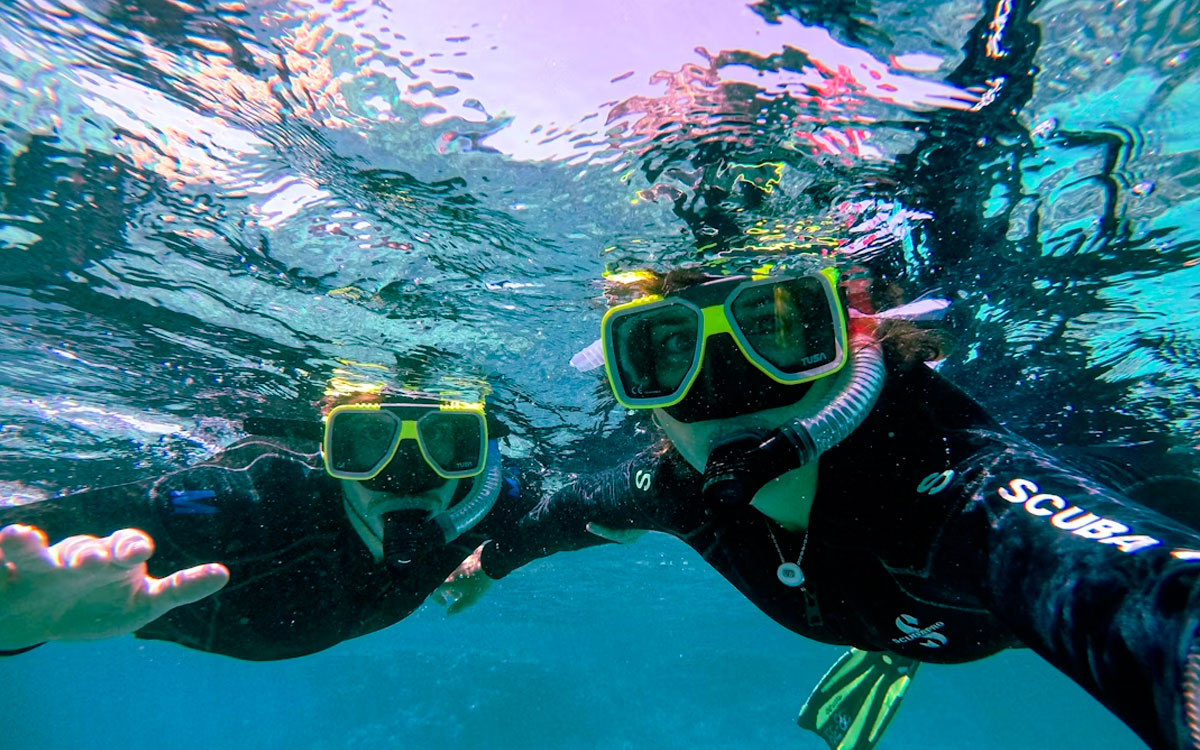
Lanzarote, the easternmost island of the Canary Islands, is a paradise for nature lovers and especially for those fascinated by the underwater world. Its crystal-clear waters, rich marine life, and the uniqueness of its submerged volcanic landscapes make it an exceptional destination for snorkeling. Today, at First Minute Excursions and Last Minute Transfer, we take a closer look at snorkel in Lanzarote.
Snorkel in Lanzarote
Without the need for complex equipment or diving experience, snorkeling in Lanzarote offers an accessible window into a vibrant and surprising marine ecosystem.
The island’s volcanic geography shapes not only its surface but also its seabed. Lava flows that entered the sea thousands of years ago have created caves, tunnels, and unique rock formations that serve as shelter for a wide variety of marine life. Combined with the excellent visibility of its Atlantic waters, this makes snorkeling an unmissable activity for any visitor.
What you might see while snorkeling
As you dip your head into Lanzarote’s waters with a mask and snorkel, you’ll witness a display of colors and shapes. Reef fish are commonly seen, such as sardines, bogues, white seabream, parrotfish (vieja, typical of the Canary Islands), black damselfish, and with a bit of luck, even a trumpetfish.
You’ll also come across volcanic rock formations—underwater caves, arches, and lava columns that create a moon-like landscape beneath the surface.
In shallow sandy areas, garden eels can often be seen poking their heads out of the seabed.
There’s also an abundance of crustaceans and mollusks, including crabs, starfish, sea urchins, and various types of sea snails. Occasionally, you might spot stingrays, sea turtles, or even dolphins, though these sightings are less common and require more luck.
Best places to snorkel in Lanzarote
The island offers numerous ideal snorkeling spots, suitable for all experience levels.
Playa Chica (Puerto del Carmen)
Probably the most popular and accessible place for snorkeling and diving in Lanzarote. Its calm, protected waters and rich marine life in shallow areas make it perfect for beginners and families. Here, you can spot schools of fish, parrotfish, and if you venture a bit farther, groupers and amberjacks. There are underwater platforms and excellent visibility.
Papagayo Beaches (Playa Blanca)
This group of white sand coves and turquoise waters is famous for its natural beauty. Although a small entrance fee is required to access the natural park, the experience is well worth it. The rocky seabed near the shore teems with life, and the waters are usually very clear and sheltered from waves. It’s a great place to spend the day and combine snorkeling with relaxation.
Caletón Blanco (Órzola)
Located in the north of the island, near Órzola, this spot stands out for its natural pools formed by volcanic rock and its white sand. It’s a very peaceful and safe place, ideal for snorkeling in a natural and less crowded environment—especially with children. Marine life thrives in its pools and crevices.
Other interesting areas
La Garita (Arrieta)
A more local beach in the town of Arrieta, on the northeast coast. It features interesting rocky zones for snorkeling, with a mix of volcanic black sand and clear waters. It’s a good spot to observe larger fish if you swim a bit away from the shore.
Los Charcones (Playa Blanca)
To the west of Playa Blanca, this area of natural tidal pools offers a dramatic landscape and a unique snorkeling experience in calm, enclosed saltwater. Marine life temporarily gets trapped in these pools, making it easier to observe in a safe, wave-protected setting.
Malpaís de La Corona (Haría/Ye)
Although better known for its hiking trails and volcanic tubes, the nearby coastline—especially in hidden coves—can offer interesting underwater formations to explore while snorkeling. Caution is advised regarding currents and access conditions.

Leave A Comment