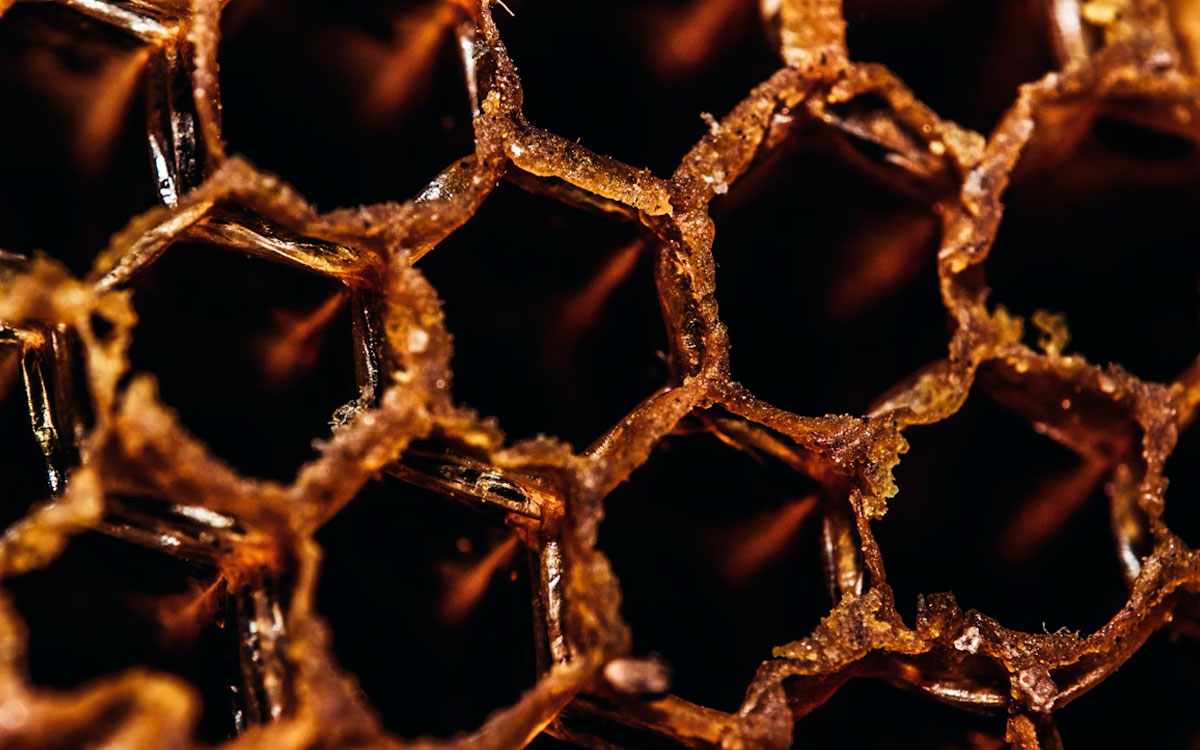
Lanzarote, the island of volcanoes and lunar landscapes, captivates not only for its unique geology but also for being home to a one-of-a-kind beekeeping treasure. This is the Canarian black bee (Apis mellifera mellifera subspecies major, or Apis mellifera ssp. cypria according to some classifications, although the former is more widely accepted) — and, by extension, the honey it produces. This bee subspecies, which has adapted over thousands of years to the climate and flora of the Canary Islands, is an invaluable genetic heritage, and its honey reflects the island’s singular ecosystem. Today, on the blog of First Minute Excursions and Last Minute Transfer, we talk about black bee honey in Lanzarote.
Black Bee Honey in Lanzarote
The Canarian black bee stands out from other subspecies due to several traits: its darker (almost black) color, slightly larger size, gentler behavior, and remarkable resistance to diseases and parasites like Varroa destructor.
Its adaptation to Lanzarote’s arid and windy climate—with mild winters and hot summers—makes it especially efficient at gathering nectar from the local flora, which is often scarce and scattered.
However, this endemic subspecies faces serious threats, mainly hybridization with foreign bees introduced by beekeepers aiming to increase honey production. This hybridization dilutes the bee’s pure genetics and jeopardizes its resistance and adaptation to local conditions, making its conservation a top priority.
A very distinctive honey
The honey produced by the black bee in Lanzarote is a true reflection of the island’s native flora. Given the volcanic landscape and the lack of extensive flowering areas, Lanzarote’s honey tends to be multifloral, meaning it is made from the nectar of various plant species that bloom throughout the year.
Among the most common are tajinaste, barrilla, tababibas, cardones, flora from ravines, and fig trees.
Due to this floral diversity and the island’s climate, black bee honey from Lanzarote typically has very distinctive organoleptic characteristics.
Its color can vary from light amber to darker tones, depending on the predominant flowers during each harvest season. Its texture is generally dense and tends to crystallize—an indicator of purity and quality.
In terms of flavor, it is complex and nuanced, often featuring notes reminiscent of wild and volcanic flora, with subtle mineral or slightly salty touches, which make it truly unique. Its sweetness is typical of high-quality honey.
Finally, its aroma is floral and persistent, evoking the island’s landscape.
A treasure to value and protect
Black bee honey from Lanzarote is more than just a hive product; it is a symbol of the island’s biodiversity and a testament to natural adaptation. Its production is limited and often prized for its purity and for being the result of the work of a unique species.
Each jar of this honey encapsulates the volcanic landscape, the Canarian sun, and the tireless work of these bees. Consuming it is not only a pleasure for the senses but also an act of support for local beekeepers who strive to preserve the genetic purity of the Canarian black bee, thus protecting one of Lanzarote’s most valuable natural heritages.



Leave A Comment