Enjoying the stunning coastline of the archipelago is the dream of every traveler who lands on our islands. However, the Atlantic Ocean has an imposing force that must always be respected to avoid unnecessary incidents. For this reason, understanding the meaning of beach flags in the Canary Islands is essential to ensure your day by the sea is completely safe.
These signals are not simple decorations; they are vital tools used daily by lifeguard services to protect us.
Not sure what each one means? We explain it in our First Minute Excursions and Last Minute Transfer blog.
Beach Flags in the Canary Islands: The Color Code You Should Know
The green flag is the signal everyone hopes to see when arriving at beaches like Maspalomas or Papagayo. This color indicates that sea conditions are suitable for swimming and that there are no hidden dangers.
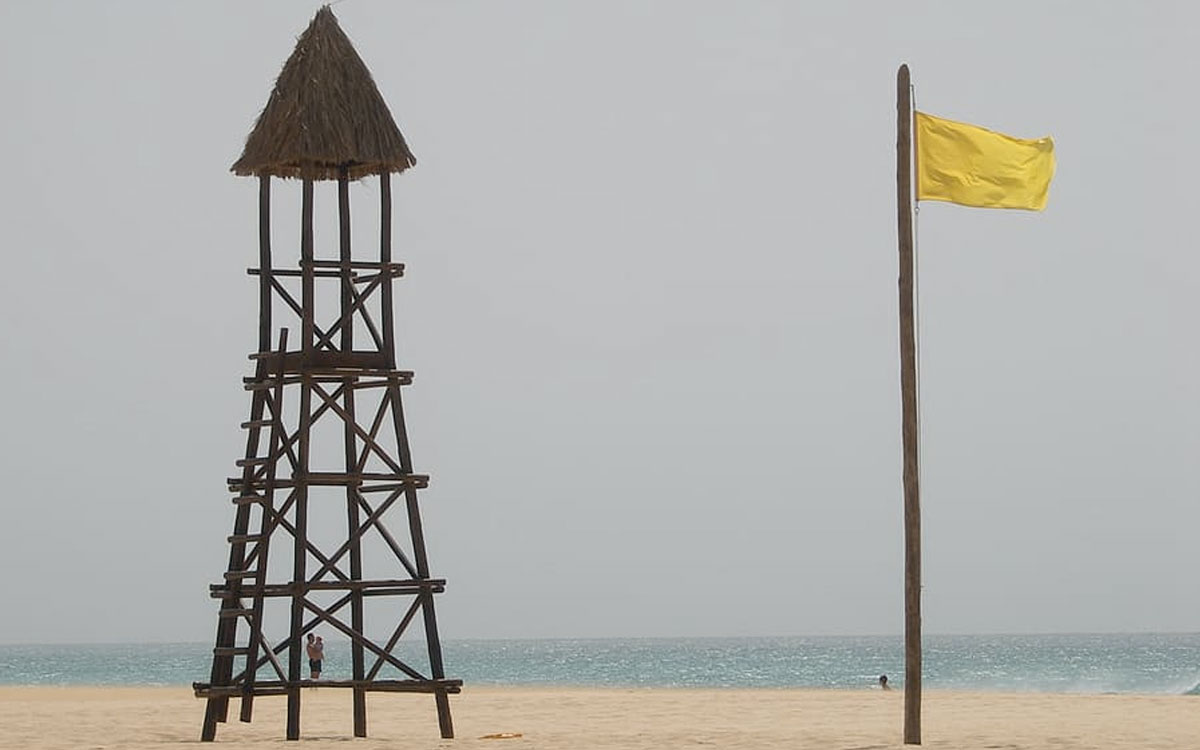
On the other hand, the yellow flag allows swimming but with great caution, prohibiting moving too far from the shore. It is commonly raised when there are moderate currents or undertows that may make returning to land more difficult.
This signal should never be underestimated, especially when traveling with children or people with reduced mobility.
Extreme Danger and Swimming Prohibited
When you see the red flag waving strongly, the message is clear and firm: swimming is strictly prohibited.
This alert is raised due to dangerous waves, strong currents, or weather conditions that threaten safety. Ignoring this warning is not only reckless but may also result in significant fines in many municipalities.
Among beach flags in the Canary Islands, the red one marks the line between a simple anecdote and a preventable tragedy.
Special Signals You May Encounter
In addition to the basic colors, there are specific flags used in less common but important situations.
A white flag with jellyfish symbols warns of their presence in the water or along the shore. Even if the sea looks calm, contact with their tentacles can quickly ruin your holiday with painful stings.
Meanwhile, the black flag indicates that a beach is closed due to serious health risks. This may be caused by water contamination or rockfalls from nearby cliffs.
Safety Recommendations for Visitors
Beyond visual signals, common sense is your best ally during coastal excursions in Gran Canaria or Lanzarote.
Always swim in areas supervised by lifeguards and strictly follow their instructions, including public address announcements.
If you are caught in a rip current, stay calm and swim parallel to the shoreline. Never attempt to swim directly against the current toward the beach, as this will exhaust you dangerously and very quickly.
Understanding beach flags in the Canary Islands allows you to choose the best beach according to daily conditions. Your safety is our absolute priority while you focus on enjoying the sun and the sea.





Leave A Comment